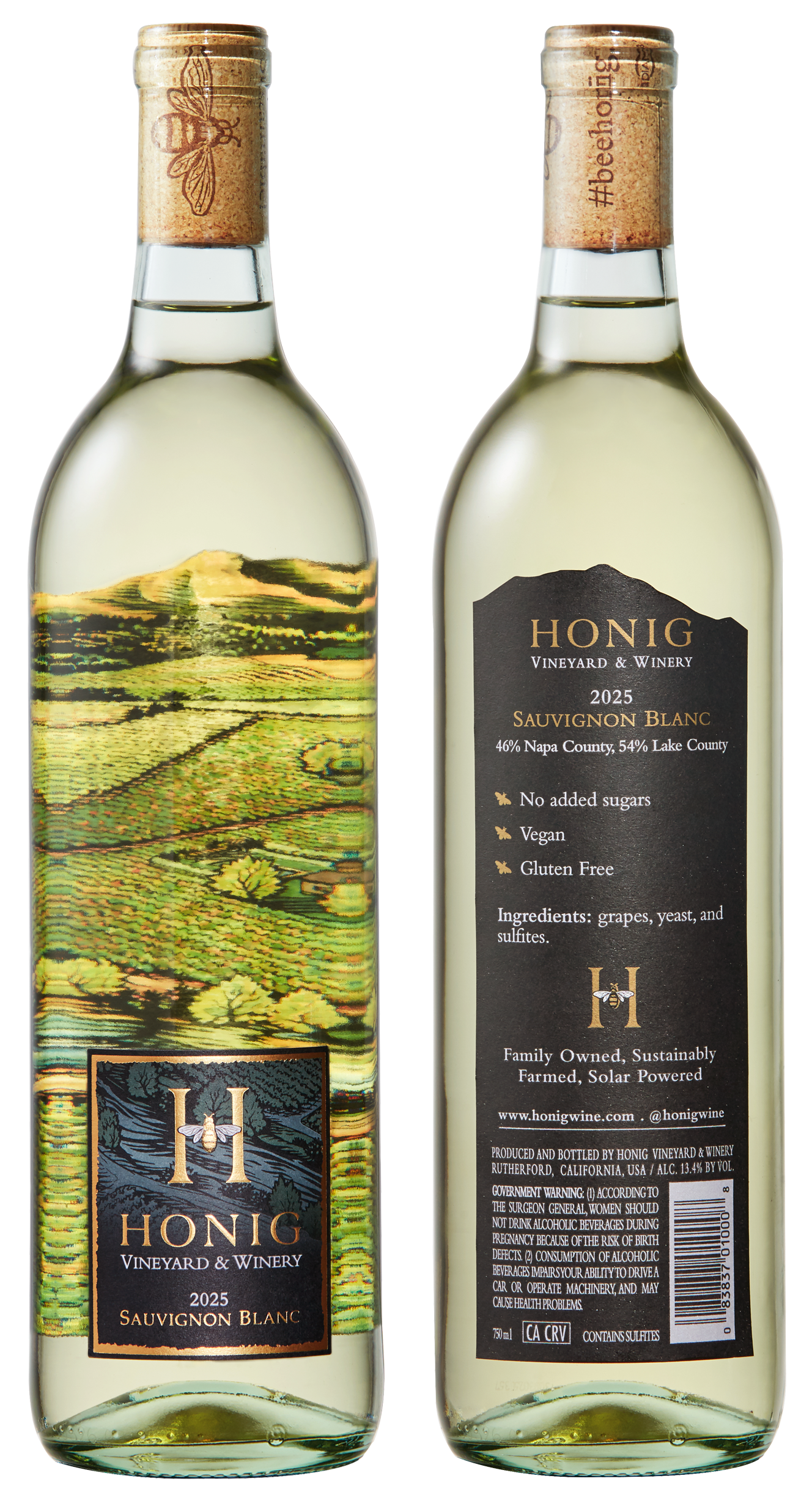
The Honig Sauvignon Blanc has always been known for its see-through front label. Now the back label is just as clear. Starting with the 2025 vintage, the bottle lists exactly what's inside: grapes, yeast, and sulfites.
Why We're Doing This
Wine has never been required to carry an ingredient label. The TTB (Alcohol and Tobacco Tax and Trade Bureau), which regulates alcohol labeling, does not currently mandate it, and most producers leave the back label to marketing copy instead. Honig thinks consumers have a right to know what they're consuming, so they decided not to wait for a requirement that may or may not come.
That decision fits a pattern. Honig was among the first Napa wineries to remove foil capsules and one of the first to run on solar power. Voluntary transparency, ahead of a mandate, is part of how this family winery operates.
Consumer decisions increasingly come down to what's actually in a product, and that scrutiny is no longer limited to grocery aisles. Wine, especially at a premium price point, is getting the same question: what's in this bottle? Honig wanted an answer ready before someone had to ask.
What's Actually in the Bottle
The Honig Sauvignon Blanc has three ingredients. That's the whole list.
- Grapes. Estate-grown and sourced fruit, farmed under Honig's sustainable practices.
- Yeast. Used to ferment the grape juice into wine.
- Sulfites. A naturally occurring compound in winemaking, used in small amounts to preserve freshness and stability.
Nothing is added beyond what it takes to turn grapes into wine, and there is no added sugar. Some vintages are aged in oak, but oak is a vessel, not an added ingredient, so it doesn't appear on the label.
What This Means for How You Drink
The Sauvignon Blanc has also been certified vegan and gluten-free. That certification is separate from the ingredient label, but the two work together: the label shows what's in the bottle, and the certification confirms it meets those dietary standards. Guests no longer have to ask during their tasting to know either one.
Where to Find the New Label
The 2025 Sauvignon Blanc is the first Honig wine to carry the ingredient label, available now. The Cabernet Sauvignon will carry the label starting with the 2024 vintage, though that release is still a ways off.
Where to Find this Wine
The Honig Sauvignon Blanc is sold in retail stores and restaurants in all states in the US. You can also purchase directly through the Honig wine club, in the tasting room or on the website
Frequently Asked Questions
Is ingredient labeling required for wine?
No. The Alcohol and Tobacco Tax and Trade Bureau (TTB), which regulates wine labeling, does not currently require an ingredient list. Honig added one voluntarily.
What ingredients are in the Honig Sauvignon Blanc?
Three: grapes, yeast, and sulfites. Some vintages are aged in oak, but oak is a vessel used during winemaking, not an added ingredient.
Why does wine contain sulfites?
Sulfites are a naturally occurring preservative that winemakers add to wine to keep it stable and fresh. When wine is exposed to oxygen, it can oxidize and lose its intended flavors—sulfites prevent this. Winemakers have relied on sulfites for centuries because they're one of the most effective ways to preserve wine during aging and storage.
At Honig, we use sulfites like every other winery does. What makes us different is transparency: we print our ingredients right on the back label—grapes, yeast, sulfites. That's it. We believe in being straightforward about what goes into our bottles, so you know exactly what you're drinking.
Which Honig wines currently have the ingredient label?
The 2025 Sauvignon Blanc is the first release with the new label. The Cabernet Sauvignon will carry it starting with the 2024 vintage, though that release is still a ways out.
